
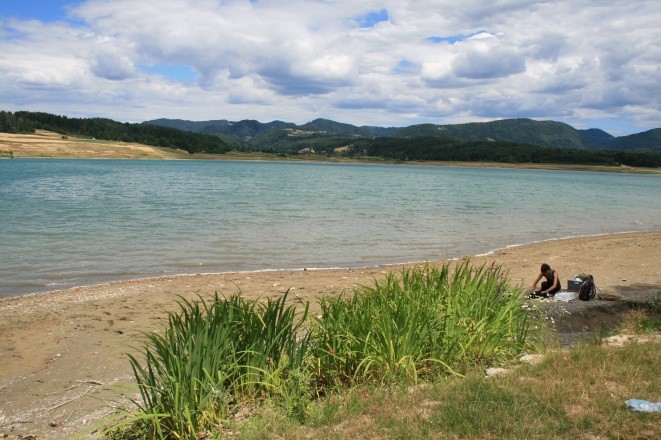
One of the biological elements used to assess ecological status is the communities of benthic invertebrates. Owing to their widespread distribution and relative confinement to specific habitats, their high biodiversity and high sensitivity to various environmental factors, benthic invertebrates serve as good indicators of many changes in aquatic ecosystems – bioindicators. Whilst benthic invertebrates are frequently used to assess the ecological status of rivers, their use for assessing the ecological status of lakes is relatively rare. To develop methodologies for assessing ecological status, it is essential to understand the relationships between aquatic organisms and environmental pressures. Understanding the interactions between abiotic and biotic factors forms the basis for the preparation and improvement of existing management plans for standing waters.
The main aim of the study was to assess the impact of the combined effects of land-use pressures, eutrophication, hydromorphological characteristics and fisheries management on benthic invertebrate communities, and to determine at which values of selected pressure gradients changes in the communities occur that can be recognised as ecological thresholds.
About the project
Supervisor
Assoc. Prof. Dr Gorazd Urbanič
PhD student
Dr Rebeka Šiling
Project duration
2012 – 2016
OTHER DOMESTIC REFERENCES
