On Friday, 7 June 2025, we at the Water Institute of the Republic of Slovenia (IzVRS), in collaboration with the Ministry of Natural Resources and Spatial Planning, opened the exhibition ‘Marine Litter in Slovenian Waters’, which is on display in the ministry’s lobby. The opening took place on World Oceans Day, which the international community marks every year on 8 June with the aim of highlighting the importance of the oceans for life on Earth and promoting responsible stewardship of the marine environment.
The exhibition was opened by State Secretary Dr Lidija Kegljevič Zagorc, State Secretary Miran Gajšek, Director-General of the Water Directorate Dr Lidija Globevnik, Director of IzVRS Neža Kodre, and Neža Kodre, and Dr Tine Bizjak, lead researcher at IzVRS in the field of water pollution.
Dr Lidija Kegljevič Zagorc emphasised the importance of the oceans as a source of oxygen, a climate regulator and a habitat for numerous species, whilst Mag. Gajšek, meanwhile, highlighted that he was shocked by the fact that more than a quarter of all marine litter in Slovenia consists of cigarette butts – a type of waste that individuals can most easily prevent.
In the main part of the presentation, the Director-General of the Water Directorate, Dr Lidija Globevnik, emphasised the role of the national Marine Environment Management Plan, which meets the requirements of the European Marine Strategy Framework Directive and also includes measures to reduce marine litter.
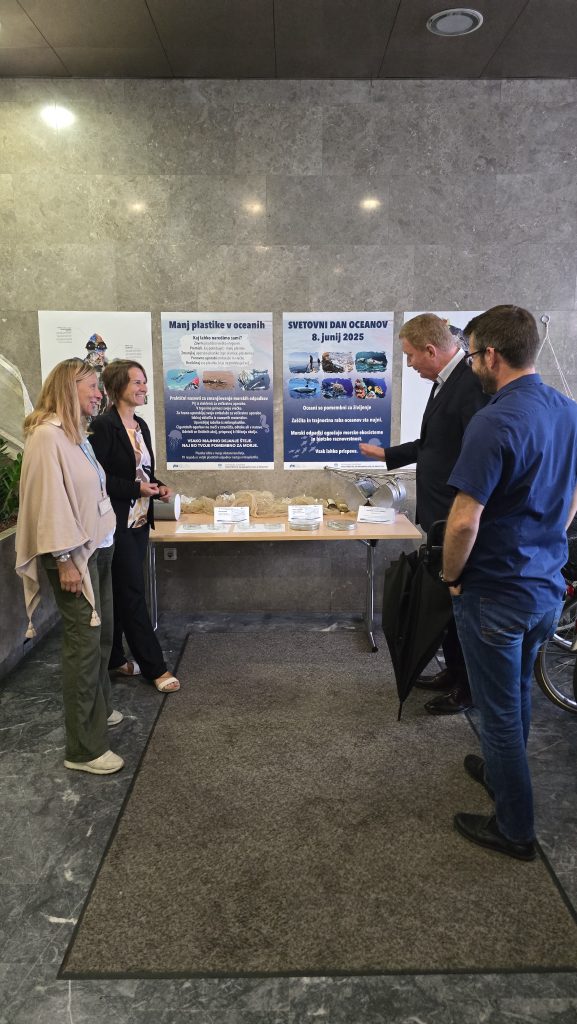
On World Oceans Day, the Institute for Marine Research and Fisheries (IzVRS) organised an exhibition on marine litter in Slovenian waters
The role of the Institute for Water Research of the Republic of Slovenia (IzVRS) in the scientific understanding and monitoring of marine litter
The Slovenian Water Research Institute has been systematically monitoring the state of marine litter in Slovenian waters for over a decade. Staff at the Institute carry out research and projects on macro- and micro-litter on the coast, at the sea surface, on the seabed and in sediments. In addition, we analyse the presence of microplastics in marine organisms and in rivers that carry waste into the sea.
Dr Tine Bizjak, lead researcher in the field of water pollution, presented the latest data and highlighted the importance of a holistic understanding of the waste pathway – from land to sea. In this context, he also highlighted the Institute’s participation in two European projects: Aquatic Plastic and Tethys4Adrion, which are focused on developing methodologies to assess the input of marine litter via rivers. “By analysing the contribution of rivers, we can target measures where they have the greatest impact – on land, at the source of pollution,” he emphasised.
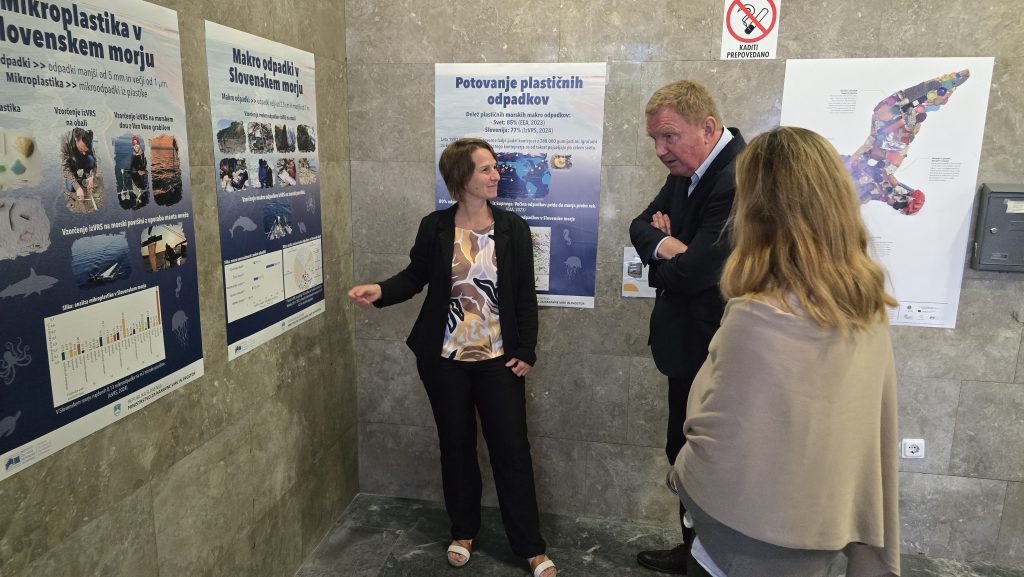
To mark World Oceans Day, IzVRS organised an exhibition on marine litter in Slovenian waters
The exhibition’s message: “Small actions count.”
At the close of the event, IzVRS Director Neža Kodre, MA, emphasised the importance of personal responsibility:
“Every individual can contribute to tackling the problem of marine litter – by refusing plastic bags, using microplastic-free products, and taking part in clean-up campaigns. Every single step we take is important for a cleaner sea.”
Visitors to the exhibition can learn about the types of marine litter, its journey from land to sea, its impact on marine organisms, and the scientific methods we are developing at the Institute of Marine Research (IzVRS). The exhibition also offers practical advice on how individuals can reduce their impact – notable recommendations include using reusable bottles, microplastic-free cosmetics, and, above all, the proper disposal of cigarette ends, which still represent one of the most common types of litter in our sea.
The exhibition will be on display in June.
You’re invited to visit it and join us in helping to keep our seas cleaner.
Let your actions make a difference to the sea.
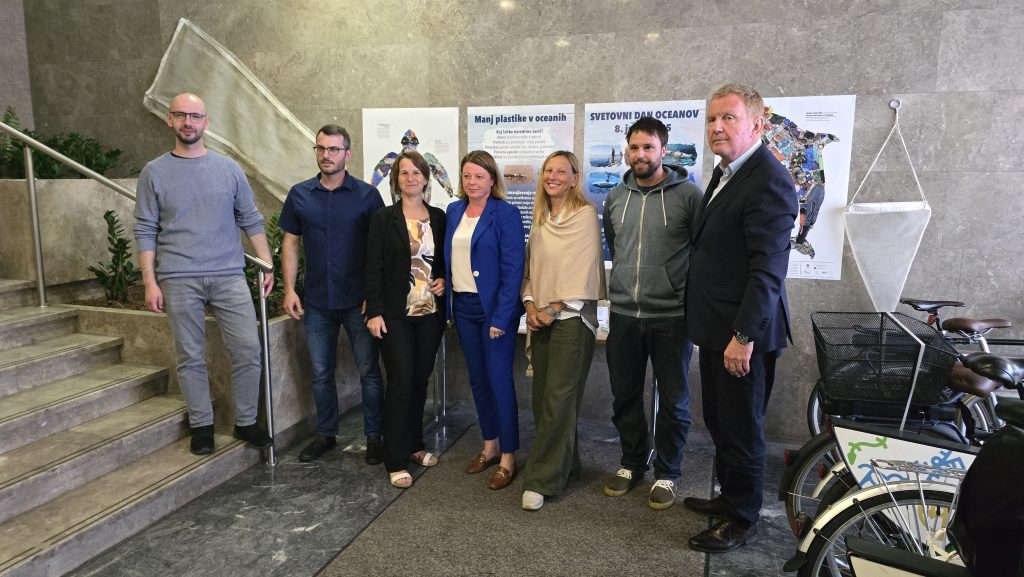
To mark World Oceans Day, IzVRS has organised an exhibition on marine litter in Slovenian waters