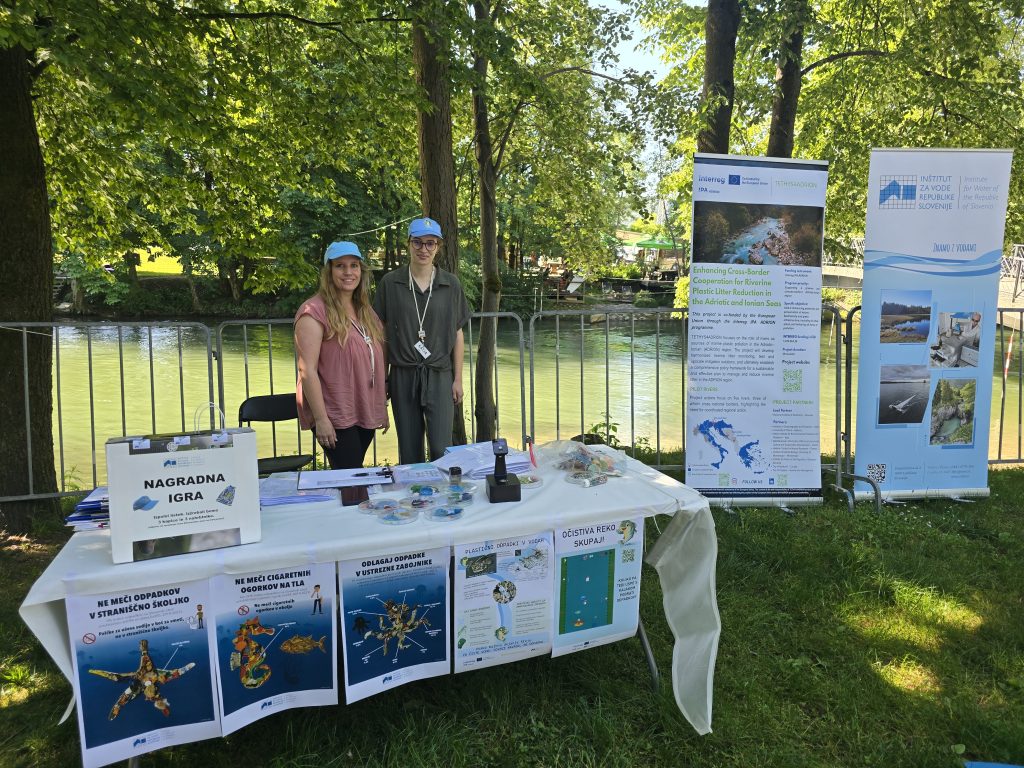
This morning, as part of the supporting programme for the Whitewater Slalom World Cup, an awareness-raising event for children took place at the Tacen Canoeing Centre, organised by the Water Institute of the Republic of Slovenia (IzVRS). More than 140 children from primary schools in Ljubljana had signed up for the workshops.
Through interactive activities, they were guided by the IzVRS fish mascot, who explained to the children in a playful and easy-to-understand way the importance of clean rivers and the impact of litter on aquatic ecosystems. The children learnt how waste from our environment can travel via streams and rivers all the way to the sea, where it poses a risk to animals, plants and the quality of the environment.
Particular emphasis was placed on learning about different types of waste, especially plastic. The children learnt to recognise different types of plastic materials and familiarised themselves with the plastic type codes found on everyday products. Using a portable spectrometer, they were also able to analyse individual plastic items themselves and check what type of plastic they were made from. In this way, they learnt in a practical way that plastic is not a single material and that its composition has a significant impact on its potential for reuse and recycling.
The 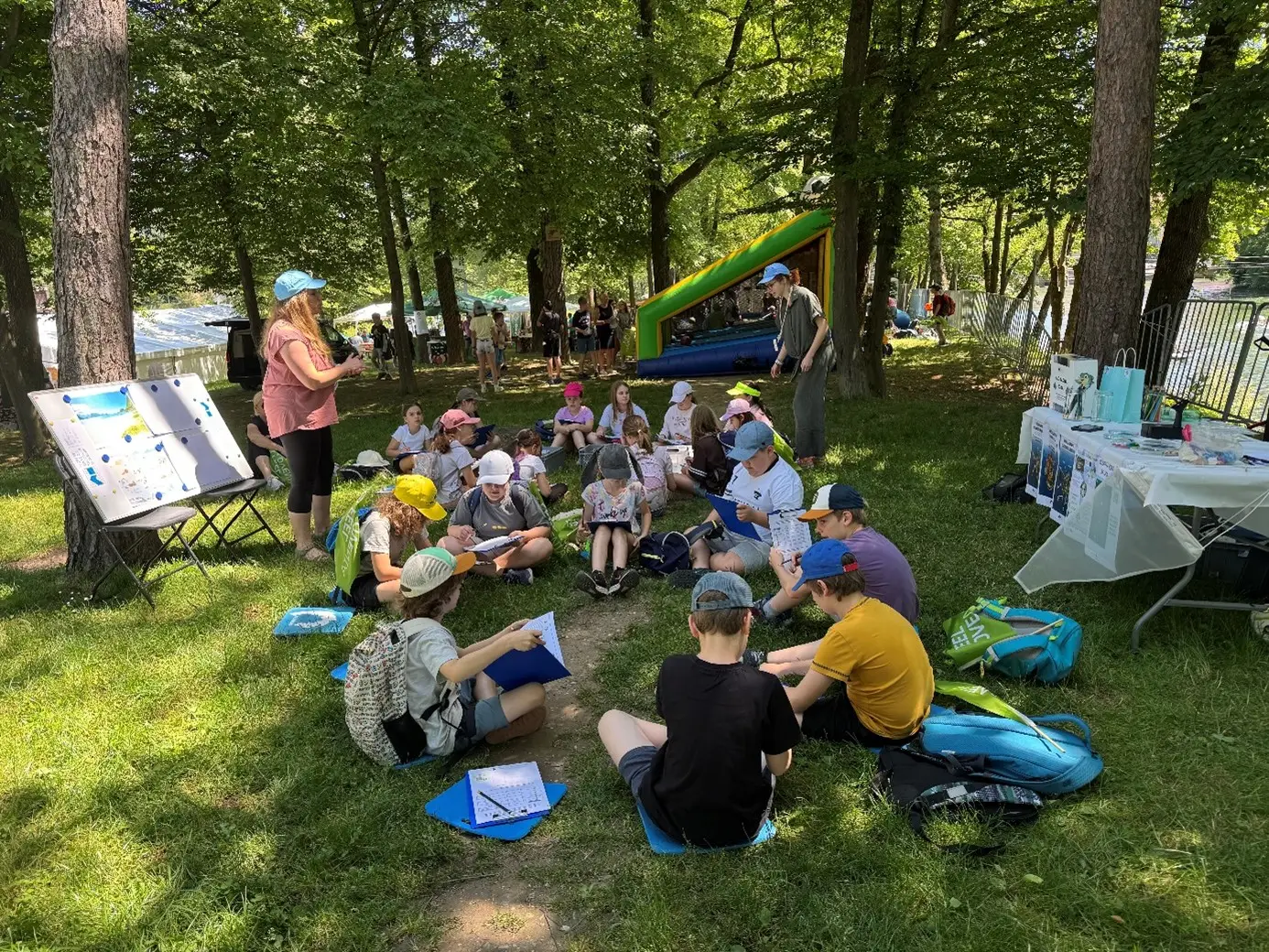 key message of the workshops was that the most effective way to reduce waste in the aquatic environment is to prevent it from entering the natural environment in the first place. Although clean-up campaigns are important, it is even more important to ensure that waste does not end up in the environment in the first place. The children therefore explored how they can contribute to cleaner rivers through their everyday habits – from using products responsibly to managing waste properly.
Special attention was also paid to sportspeople, particularly rowers, kayakers and canoeists, who have a close connection with rivers. Through their behaviour and by setting an example, they can make a significant contribution to raising awareness of the importance of protecting water and reducing waste in the environment.
The event offered children the opportunity to better understand, through play and exploration, the link between their everyday decisions and the state of rivers and the sea. The message from the IzVRS-tne fish was simple: everyone can help make rivers cleaner by ensuring that rubbish does not end up in the natural environment.