
It is expected that climate change and other pressures will affect the environment and water resources in the Vipava river basin. A management plan for the catchment area and its water resources is currently being drawn up with the aim of better adapting to future changes in conditions. At a workshop held on 23 March 2016 in Ajdovščina, 21 participants discussed ways of incorporating water management options into the adaptation plan for the Vipava River catchment area.
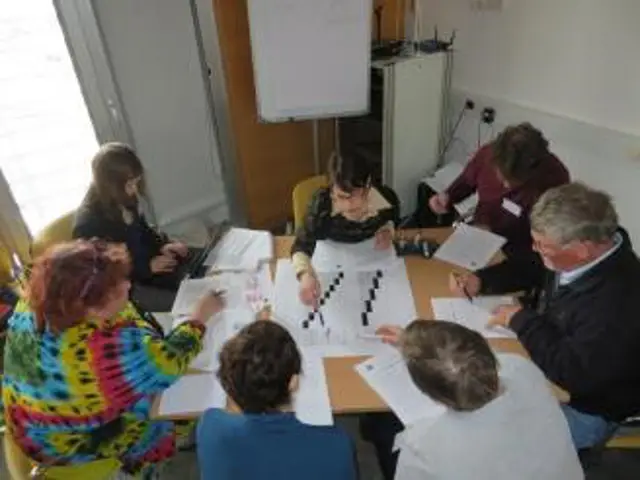
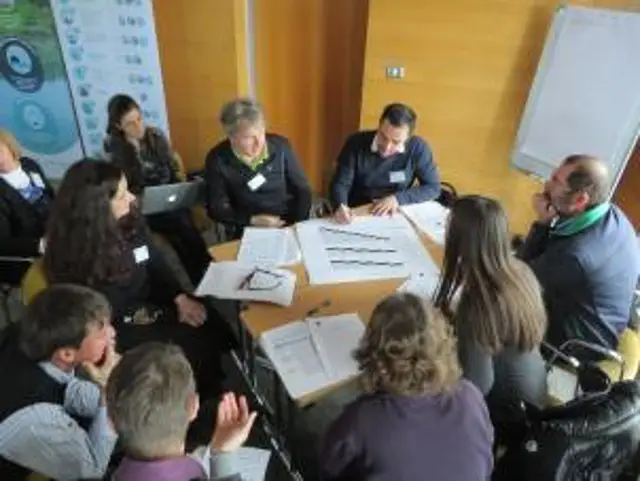
As part of the BeWater project, representatives of the Slovenian Water Institute, together with experts from the Ecologic Institute in Germany, organised a workshop at the premises of the Ajdovščina Regional Chamber of Crafts and Entrepreneurship. The main aim of the workshop was to discuss and optimise the content of the adaptation plan being prepared for the catchment area, through stakeholder collaboration. The workshop was attended by 21 stakeholders from various sectors, all of whom share a common concern for the Vipava river basin.
Following a brief introductory welcome by Mr David Bratož, Director of the ROD Ajdovščina Development Agency, and Manca Magjar from the Slovenian Water Institute, there was a short presentation outlining the purpose of the workshop. Following an introductory presentation of the results of the BeWater project carried out over the past year, the interactive part of the workshop began, divided into three sections. For each section, participants sought to identify combinations of various water management options (hereinafter WMO) proposed at the workshop held in June 2014. At the same time, the aim was to identify potential synergies and conflicts between these combinations. The WMMs were subsequently grouped into seven sets of measures with the aim of addressing the identified challenges of the Vipava river basin more effectively.
After identifying the synergistic benefits and conflicts between the combinations of MUVs, the participants compared their results with those prepared by representatives of the Slovenian Water Institute. The participants then proposed changes and additions to the groups of measures that had been formulated and reviewed the proposed order of implementation for individual MUVs. Municipal representatives showed great interest in the proposed groups of measures, but highlighted their limitations in terms of the municipalities’ own powers.
In the final session of the workshop, which was conducted using the ‘World Café’ method ( ‘World Café’ method), participants freely expressed their thoughts and ideas regarding the desired content and implementation of the adaptation plan for the Vipava river basin. The proposals gathered will serve to supplement the content of the adaptation plan with the aim of supporting the wishes and needs of stakeholders in the catchment area in accordance with the applicable strategic documents. At the conclusion, most participants highlighted the importance of such events, where they can actively participate in shaping proposals for river basin management solutions. Nevertheless, greater participation by representatives of government institutions responsible for water management would be desirable.
The workshop was the third in a series of four organised as part of the BeWater project. “The workshop represents an important and crucial step towards drawing up an adaptive water management plan for the Vipava River catchment area. Through various consultation and co-decision-making processes, we are involving the interested public in discussions on water use in the Vipava River catchment area with the aim of drawing up a joint plan to adapt their region to climate change. “The aim of the adaptation plan is the sustainable management of water in the Vipava River basin and adaptation to climate change,” says Manca Magjar from the Slovenian Water Institute. “The proposals gathered will serve to supplement the content of the adaptation plan being drawn up for the Vipava River basin, which is due to be finalised by summer 2016,” she adds.
Similar workshops are also being held in three other pilot catchment areas in the Mediterranean, namely in Cyprus, Spain and Tunisia.
The aim of the European BeWater project is to promote dialogue and cooperation between science and society in the field of sustainable water management and adaptation to climate change in the Mediterranean. The BeWater project is funded under the European Union’s 7th Framework Programme as part of the Science in Society initiative.
Follow the activities and results of the BeWater project:
visit us at www.bewaterproject.eu or https://www.izvrs.si/project/7op-bewater-2/.
For further information, please contact: bewater@izvrs.si
Photographs: IzVRS and Ecologic