
Planning for adaptation to climate change in the Vipava River catchment
Climate change and other pressures are expected to affect the environment and water resources in the Vipava River catchment area. It is necessary to begin planning the management of the catchment and its water resources so that they are adapted to future changes in conditions.
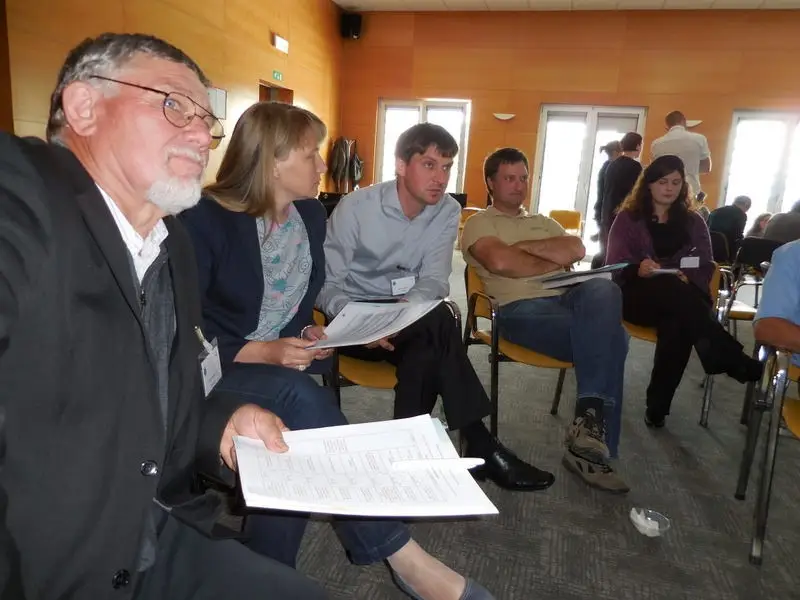
Experts from the Water Institute of the Republic of Slovenia, who are involved in the BeWater project, have already organised several workshops to discuss water management in the Vipava River basin in the context of global change. Participants at the first workshop identified the challenges associated with water management and proposed possible solutions to these challenges. At the second workshop and an open consultation, participants refined and evaluated more than 20 water management options. The priority options were the establishment of a specialist inter-municipal working group for the Vipava River catchment, raising awareness amongst various stakeholder groups, and the construction of water retention basins in the upper reaches of the Vipava River catchment.
In collaboration with experts from the Ecologic Institute, the third workshop will be held on Wednesday 23 March at the premises of the Ajdovščina Chamber of Crafts and Entrepreneurship. The focus will be on developing an adaptation plan for the Vipava river basin. The workshop will consist of several interactive discussions aimed at determining how the water management options proposed at previous workshops can be combined, and whether there are potential synergies or conflicts between them. During the workshop, we will explore how the selected options could be implemented in practice.
Workshop participants will include, amongst others, representatives of government institutions responsible for water management and nature conservation, regional development agencies, local authorities, the Slovenian Fisheries Institute, agro-meteorological researchers, secondary school teachers, a representative of local farmers and a representative of a company providing public water management services.
“At previous workshops, we discussed with stakeholders possible solutions to the identified pressures and challenges in the Vipava river basin, taking climate change into account. We will now examine ways of implementing the proposed possible solutions,” said Manca Magjar, a researcher at the Water Research Institute of the Republic of Slovenia, who is responsible for coordinating project activities in the Vipava river basin.
Similar workshops are also being held in three other pilot catchment areas in the Mediterranean, namely in Cyprus, Spain and Tunisia. Together, the four catchment areas represent the diverse environmental and socio-economic conditions found across the Mediterranean region.
The BeWater project is funded under the European Community’s 7th Framework Programme for Research, Technological Development and Demonstration Activities. The aim of the project is to develop adaptation plans for river basins in the Mediterranean through public participation. For further information, please contact Manca Magjar.
Photographs: IzVRS